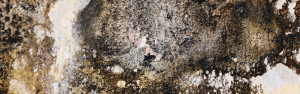
Mold usually smells musty, stale and earthy. People describe it as wet socks, a damp towel left in a gym bag, old cardboard, a basement, or rotting wood and leaves. The smell comes from gases mold gives off as it grows. If you notice that smell in your home and it doesn’t go away after cleaning, there’s a good chance something is growing somewhere you can’t see. In Florida, with our heat and humidity, that’s one of the most common smells we’re called about.
Does Mold Have a Smell?
Yes, actively growing mold usually does. The stronger and wetter the growth, the stronger the smell tends to be. But the smell isn’t a perfect test either way:
- You can smell mold without seeing it. It’s often behind drywall, under flooring, inside cabinets or in the AC system.
- You can have mold without much smell. Small or dried-out growth may smell faint or not at all.
- You get used to it. People who live with the smell stop noticing it. Guests, or you after a trip, often notice it first.
What Mold Smells Like, in Plain Words
- Musty or stale, like a room that’s been closed up for months.
- Earthy, like wet dirt or a forest floor.
- Wet socks or a sour damp towel. If your AC smells like this, see dirty sock syndrome.
- Damp cardboard or old newspapers.
- Rotting wood, especially near leaks around windows, cabinets and baseboards.
You can’t tell the type of mold by its smell. “Black mold” doesn’t have a special smell of its own, and color alone doesn’t tell you the type either. Only lab testing can do that, and in most homes the more important question is where the moisture is coming from.
Mold Smell vs. Mildew Smell
Mildew is a type of mold that grows flat on surfaces like shower grout, towels and window sills. Its smell is usually lighter and goes away once you clean it. A mold smell is usually heavier and keeps coming back, because the growth is deeper in a material or hidden from view. More on that in mold vs. mildew: how to tell the difference.
Where a Mold Smell Usually Comes From in Florida Homes
- The AC closet and air handler, where condensation and a clogged drain line keep things wet. See mold in your AC closet.
- Air ducts and vents. If the smell gets stronger when the AC turns on, read why your house smells when the AC turns on and mold in air ducts.
- Under sinks and behind the dishwasher or fridge, from slow plumbing leaks.
- Behind baseboards and under flooring, from a past leak, a flood, or a slab leak.
- The attic, windows and closets on outside walls. See mold in the attic and mold on windows.
Signs the Smell Means Hidden Mold
- The smell is strongest in one room or one corner.
- It gets worse when the AC kicks on, after rain, or when the house has been closed up.
- You see stains, bubbling or peeling paint, warped baseboards or soft drywall.
- You’ve had a leak, an AC overflow or water damage in the past, even if it was “dried.”
How to Get Rid of a Mold Smell in Your House
- Find and fix the moisture. No cleaner or spray will stop the smell while the source is still wet.
- Clean or remove the mold. Small surface spots can often be cleaned. The EPA suggests larger areas (more than about 10 square feet) or mold inside walls or the AC system be handled by a professional.
- Dry things out and keep humidity down. In Florida, run the AC and use a dehumidifier if needed. The EPA recommends keeping indoor humidity below 60%, ideally 30 to 50%.
- Wash or replace what absorbed the smell: curtains, bedding, rugs and stored clothes.
- Then deal with any odor that’s left. Air fresheners and candles only cover it up, and painting over mold doesn’t fix it.
If anyone in the home has symptoms that seem to get worse in the house, talk to a doctor. See also can mold cause headaches?
Find the Source With a Free Visual Inspection
We offer a free visual inspection with moisture readings and an infrared (thermal) camera, which helps us find wet areas behind walls and ceilings without cutting them open. Lab testing is separate if it’s needed (see mold inspection vs. mold testing). Florida licenses: Mold Assessor MRSA4035, Mold Remediator MRSR4158. For more on musty smells in general, see what a musty smell means in a Florida home.
When the Mold Is Gone but the Smell Isn’t
Once the moisture is fixed and the mold is properly removed, a stale smell can still hang on in the air, the AC system and soft furniture. Our whole-home odor removal treatment treats the air throughout the entire home, including one AC system and an attached garage. You’ll be out for about 8 hours. It’s an odor treatment only. It does not remove or kill mold, so the source always gets fixed first. Smell something different? See our smell-by-smell guide.
Whole-Home Odor Removal in South Florida: $997
Our Whole-Home Odor Removal Treatment is $997 and includes one AC system ($550 for each additional AC unit). You can buy and schedule it online, or call 877-224-2532 to request a free visual inspection. We answer 24/7; when you call, we’ll tell you honestly when a technician can be there based on that day’s schedule. Hablamos español.
About the author: James Rice-Peña is the owner of FL Cleanup and a Florida-licensed Mold Assessor (MRSA4035) and Mold Remediator (MRSR4158). He has worked in property restoration in South Florida since 2012, and FL Cleanup has earned 200+ five-star Google reviews.