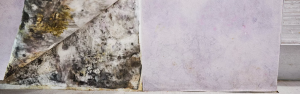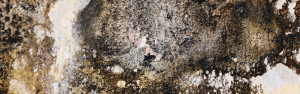
If your house smells fine most of the time but turns musty every time it rains, that’s an important clue. A smell that comes and goes with the weather usually means water is getting in somewhere, or the air inside is getting more humid than your AC can handle. In South Florida, where afternoon storms roll through almost daily in the rainy season, a small leak can stay wet for months without anyone seeing it.
Why Rain Brings Out the Smell
Musty smells come from moisture and the mold or mildew that grows with it. When materials that got wet before (drywall, wood, carpet pad, insulation) get wet again, the smell gets stronger. High humidity after a storm also makes any existing smell easier to notice.
Common Sources in Florida Homes
- Roof leaks. Look for ceiling stains, especially near vents, skylights and where roof sections meet. The attic often smells first. See mold in the attic.
- Windows and sliding doors. Failed seals and clogged sliding-door tracks let wind-driven rain in under the frame. See mold on windows and sills.
- Cracks in stucco and block walls. Water can soak through and show up as bubbling paint or swollen baseboards on the inside of outside walls.
- Water pooling near the house. Downspouts that dump next to the foundation and yards that slope toward the house keep the slab and lower walls wet.
- The AC can’t keep up with the humidity. A clogged condensate drain, a dirty coil or a system that turns on and off too quickly can leave the air damp. See AC leaking water inside the house and why your house smells when the AC turns on.
- Closets on outside walls. They get little airflow, so they’re often where the smell shows up first.
How to Track It Down
- Walk the house during or right after a storm. Notice which room smells strongest and check ceilings, window sills, door thresholds and baseboards there.
- Look inside closets and cabinets on outside walls, and under sinks.
- Check the humidity. An inexpensive hygrometer tells you a lot. The EPA recommends keeping indoor humidity below 60%, ideally 30 to 50%.
- Check the AC. Change the filter, and make sure the condensate drain is flowing and the drain pan isn’t full.
- Look outside. Check gutters and downspouts, and where water pools after a storm.
Keep the AC running and the doors and windows closed while it’s humid out. That helps dry the air inside. If you find something wet, it matters how fast it dries: the EPA advises drying wet materials within 24 to 48 hours to help prevent mold growth. See how long water damage takes to dry. For a roof, window or stucco leak, call a roofer or contractor to fix the entry point.
Can’t Find It? We Can Look for You
Water often hides inside walls and ceilings where you can’t see it. We offer a free visual inspection with moisture readings and an infrared (thermal) camera, which helps us spot wet areas behind drywall without cutting it open. A call shortly after a rain, while things are still wet, can make the source easier to find. Lab testing is separate if it’s needed. Florida licenses: Mold Assessor MRSA4035, Mold Remediator MRSR4158. For more, see what a musty smell means in a Florida home and what does mold smell like? After a bigger storm or flood, see house still smells after a flood or hurricane.
After the Leak Is Fixed
Once the leak is repaired and wet materials are dried or replaced, a stale smell can still linger in the air and the AC system. Our whole-home odor removal treatment treats the air throughout the entire home, including one AC system and an attached garage. You’ll be out for about 8 hours. It’s an odor treatment only. It doesn’t stop leaks or remove mold, so the source always gets fixed first. Smell something different? See our smell-by-smell guide.
Whole-Home Odor Removal in South Florida: $997
Our Whole-Home Odor Removal Treatment is $997 and includes one AC system ($550 for each additional AC unit). You can buy and schedule it online, or call 877-224-2532 to request a free visual inspection. We answer 24/7; when you call, we’ll tell you honestly when a technician can be there based on that day’s schedule. Hablamos español.
About the author: James Rice-Peña is the owner of FL Cleanup and a Florida-licensed Mold Assessor (MRSA4035) and Mold Remediator (MRSR4158). He has worked in property restoration in South Florida since 2012, and FL Cleanup has earned 200+ five-star Google reviews.