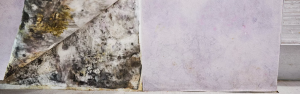
Appliance leaks fool people. The puddle in front of the machine looks small, but the water has often run under the cabinets, under the flooring and into the next room. I’ve worked more than 5,000 water jobs in South Florida since 2012, and washing machine hoses and dishwasher supply lines are some of the most common sources we see.
What to Do in the First Hour
- Turn off the water. Washers have hot and cold valves behind the machine. Dishwashers usually have a valve under the kitchen sink. If you can’t find them, shut off the main.
- Turn off power to the appliance at the plug or breaker if you can do it without standing in water.
- Take photos and video before you clean anything, including inside cabinets.
- Get standing water up with towels or a wet vac.
- Pull out the bottom drawer or toe-kick panel under the sink cabinet if you can, so you can see underneath.
- Run the AC and keep windows closed to pull humidity down.
Where the Water Hides
- Under the dishwasher and kitchen cabinets. Cabinet bottoms are usually particleboard, which swells and holds water.
- Under laminate or vinyl plank floors. Water travels along the seams and sits on the slab.
- Inside the wall behind the washer, especially if the drain box or valve is leaking.
- Into the next room. Laundry rooms often share a wall with a bedroom or hallway closet.
- In a condo, into the unit below. Tell the unit owner below and your association right away. See condo leak from upstairs: who pays?
Common Causes
- Burst or cracked rubber washer hoses (braided stainless hoses last longer)
- A dishwasher supply line or fitting that loosened
- A clogged drain or drain hose
- A failed door seal or gasket
- An overloaded washer walking away from the wall
When to Call a Pro
- Water went under cabinets or flooring
- The floor feels soft, or laminate edges are lifting
- Water reached the next room or the unit below
- You notice a musty smell a few days later
- It’s been more than a day and things still feel damp
We check with moisture readings and an infrared (thermal) camera to find water you can’t see, then dry it with dehumidifiers and air movers. Cabinets that have swelled usually can’t be saved; those that haven’t can often be dried by drilling small holes in the toe-kick area. More on whether floors have to come out after water damage.
Is It Covered by Insurance?
A sudden hose burst is often treated differently from a slow drip that went on for weeks. Read does homeowners insurance cover a slow leak in Florida? Take photos first and notify your insurer promptly.
How to Prevent the Next One
- Replace rubber washer hoses with braided stainless hoses every few years.
- Use a leak sensor or an automatic shutoff valve behind the washer and under the sink.
- Leave a few inches between the washer and the wall so hoses don’t kink.
- Turn off the washer valves when you travel.
If mold has already started, see our mold removal service in Miami. For a musty smell from the machine itself, read how to clean mold in a washing machine. For active water damage, see water damage restoration in Miami or Fort Lauderdale.
We answer 24/7; when you call, we’ll tell you honestly when a crew can be there based on that day’s schedule. Hablamos español.
About the author: James Rice-Peña founded FL Cleanup, a family-owned South Florida restoration company serving homeowners and buildings since 2016. He has worked in restoration since 2012, has completed more than 5,000 water jobs, has served as a mold expert in attorney cases, is a Florida-licensed Mold Assessor (MRSA4035) and Mold Remediator (MRSR4158), and is IICRC certified. FL Cleanup has 200+ five-star Google reviews.