Mouse and rat urine has a sharp, musky, ammonia-like smell that’s easy to mistake for a dirty litter box or a cleaning product. You’ll usually notice it in kitchen cabinets, under sinks, in closets, in the garage or coming down from the attic, and it often gets stronger on hot, humid days. In South Florida, roof rats in attics are especially common. Here’s how to handle it in the right order.
Signs It’s Rodents
- Small dark droppings in cabinets, drawers, along baseboards or in the attic.
- Chewed food packaging, wires or insulation.
- Scratching or running sounds in the ceiling or walls, especially at night.
- Greasy rub marks along walls and beams where rodents travel.
If the smell is a sudden, strong rotten smell instead, it’s more likely a rodent that died in a wall or attic. See dead animal smell in the walls or attic.
Step 1: Get the Rodents Out First
Cleaning won’t last while rodents are still getting in. Call a licensed pest control company to remove them and seal the entry points (gaps around pipes, roof lines, vents and garage doors). Only start the cleanup once the activity has stopped.
Step 2: Clean Up Droppings and Urine the Right Way
Rodent droppings and urine can carry diseases, including hantavirus. The CDC advises against sweeping or vacuuming droppings, because that can stir contaminated dust into the air. Instead, following CDC guidance:
- Air out the area (a garage, attic or shed) for about 30 minutes before you start, and stay out while it airs.
- Wear rubber or plastic gloves.
- Spray the droppings and urine with a disinfectant or a mix of 1 part bleach to 10 parts water until soaked, and let it sit about 5 minutes. Never mix bleach with ammonia or other cleaners.
- Wipe it up with paper towels, bag them, and throw them out.
- Clean the surfaces again with disinfectant, then wash your gloved hands, remove the gloves, and wash your hands with soap and water.
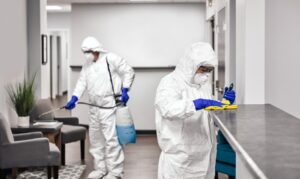
For a heavy infestation, a large attic, or anyone with health concerns, leave the cleanup to professionals.
Step 3: Deal With What Absorbed the Smell
- Attic insulation soaked with urine and droppings often has to be removed and replaced. It’s the most common reason the smell won’t leave.
- Cabinet bottoms and shelf liners: remove liners, clean the wood, and let it dry fully. Badly soaked particleboard may need replacing.
- Stored items, fabrics and boxes in the affected area: wash what you can and toss what’s soaked.
- The AC system: if rodents were in the attic near ducts or the air handler, change the filter and have the system checked, since ducts can carry the smell into every room.
Step 4: Clear the Lingering Odor
Once the rodents are gone, the mess is cleaned up and soaked materials are removed, the smell can still hang on in the air, walls and AC system. Our whole-home odor removal treatment treats the air throughout the entire home, including one AC system and an attached garage. You’ll be out for about 8 hours. It’s an odor treatment only. It doesn’t remove rodents, droppings or soaked insulation, so those have to be handled first. Related: why your house smells like ammonia. Smell something different? See our smell-by-smell guide.
Whole-Home Odor Removal in South Florida: $997
Our Whole-Home Odor Removal Treatment is $997 and includes one AC system ($550 for each additional AC unit). You can buy and schedule it online, or call 877-224-2532 to request a free visual inspection. We answer 24/7; when you call, we’ll tell you honestly when a technician can be there based on that day’s schedule. Hablamos español.
About the author: James Rice-Peña is the owner of FL Cleanup and a Florida-licensed Mold Assessor (MRSA4035) and Mold Remediator (MRSR4158). He has worked in property restoration in South Florida since 2012, and FL Cleanup has earned 200+ five-star Google reviews.